PT-141 side effects: nausea and blood pressure
Nausea dominated the tolerability record. The blood-pressure and pigmentation findings need their own attention, even when a symptom seems brief.
Open-label follow-up
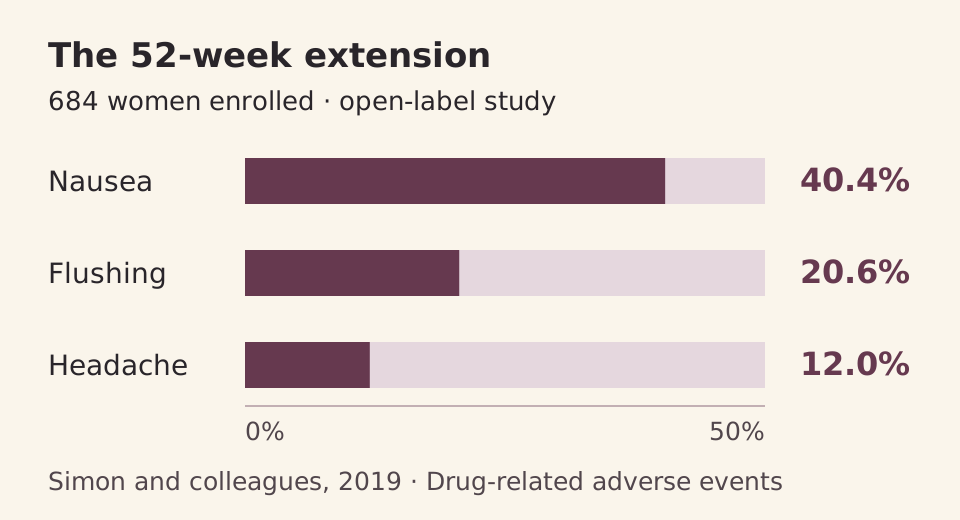
Among the 684 women enrolled in the 52-week open-label extension of RECONNECT, the most common drug-related treatment-emergent adverse events were nausea, 40.4%; flushing, 20.6%; and headache, 12.0%. Nausea was the principal tolerability issue and a leading reason for stopping. Injection-site reactions and nasal congestion were also recorded in the clinical program.
Those percentages describe this extension, in which everyone received bremelanotide and knew it. They are not a pooled estimate for every person, every formulation or every unapproved use. The integrated safety analysis likewise identifies nausea, flushing and headache as the most frequent events across development.
I give the decision to stop considerable weight. An effect can pass after a short time and still make a modest benefit difficult to live with. A favorable questionnaire result leaves that practical burden intact.
Cardiovascular exclusions
The label records a transient rise in blood pressure with a small decrease in heart rate. Bremelanotide is contraindicated in uncontrolled hypertension or known cardiovascular disease. Temporary describes the duration of the change; it leaves the contraindication in force.
The ambulatory blood-pressure monitoring study examined readings during ordinary activity. A Phase I safety study in healthy men and women also assessed tolerability and hemodynamic effects. The health of those study participants matters when interpreting a reassuring-sounding account of a short-lived change.
My quarrel with casual safety summaries is how quickly brief becomes harmless. The cardiovascular exclusions are explicit, and an individual’s history needs clinical assessment.

Skin and gum darkening
The pigmentation warning in the prescribing information concerns darkening of skin, gums and other tissue with repeated frequent dosing. Darker baseline skin is associated with greater risk, and some changes may persist after treatment stops. MC1R activity connects this unwanted effect to the wider melanocortin biology.
That connection is a useful reminder of the molecule’s reach. The mechanism page describes the brain receptors and the tanning-research origins; the skin finding is a concrete effect outside the desired change in sexual interest. Frequency limits in a label cannot guarantee that pigmentation will remain unchanged.
Liver safety, pregnancy and breastfeeding
LiverTox discusses mild liver-enzyme elevations and rare clinically apparent injury. A raised enzyme reading and an illness caused by liver injury are different observations, so the distinction matters. The monograph adds a safety consideration beyond the common nausea, flushing and headache figures.
Controlled human data establishing safety during pregnancy or breastfeeding are lacking. That gap supplies no basis for a safety claim in either situation. The approved population and the cardiovascular exclusions remain the clearest starting boundaries in the prescribing information.
Community symptom accounts
People outside trials describe nausea, warmth, headache, local irritation, tingling and tiredness, alongside accounts of no benefit. Some also report persistent darkening. These are anecdotal experiences, not clinical evidence, and they do not yield measured rates or establish what caused a symptom.
The reviews page gives those accounts more space. Suggestions in personal accounts about reducing nausea have no standing here as a preventive regimen. The inconvenience and the decision to give up matter to me. Incidence figures belong with the studies that actually counted events.